In his new column, Flávio Vegas, Product Specialist at Global X, discusses two sectors that have seen high demand due to current geopolitical tensions around the world.
An investor observing the global landscape notices two overarching themes at play simultaneously: accelerated technological advancement and a significant escalation in geopolitical tensions. This combination has reshaped government priorities, supply chains, and, naturally, investment opportunities. Among the theses standing out most in this context are defense technology and gold exploration companies. Two distinct narratives, but both conversing with the exact same context: a more complex, more digital, and less predictable world.
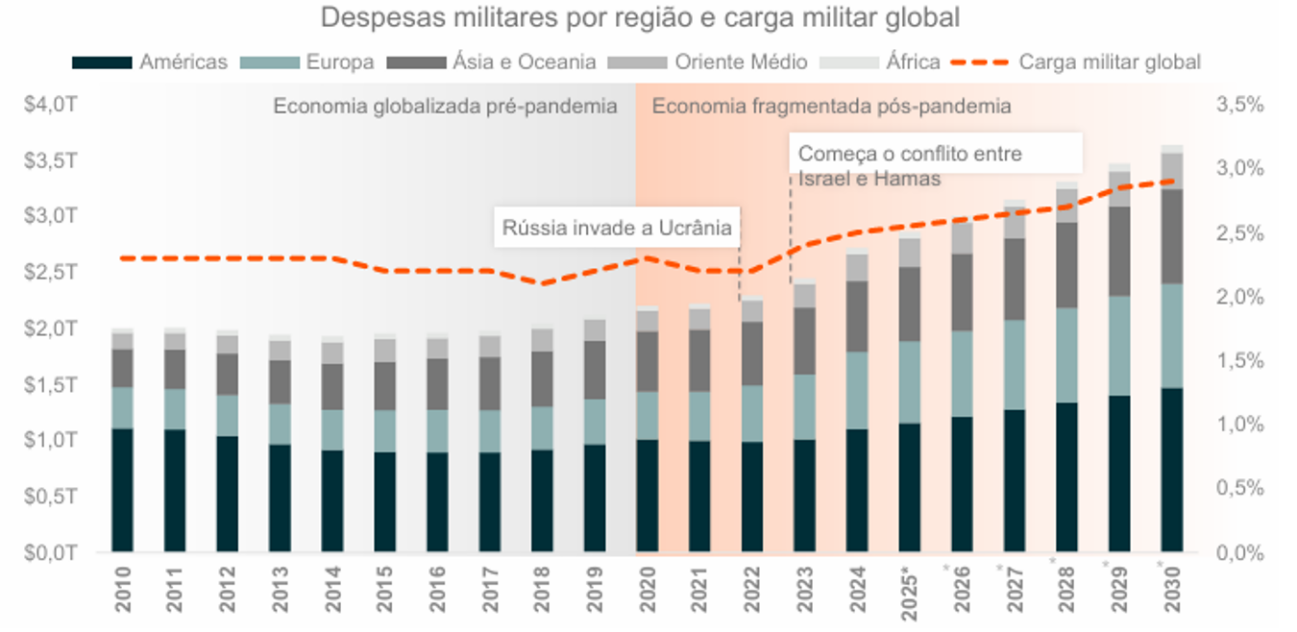
In recent years, the number of armed conflicts has reached historic levels. In 2024, there were 61 active conflicts—the highest number since World War II. To put that into perspective, 1 in every 8 people in the world was exposed to some type of military conflict. This environment drove global military spending to a record $2.7 trillion in 2024, marking ten consecutive years of growth.
Source: Global X’s Charting Disruption
A few more numbers to support the thesis
Defense budgets are rapidly shifting toward technology. The United States, for instance, proposed $179 billion just for Research, Development, Test & Evaluation in 2026, a 27% increase over the previous year. This includes investments in artificial intelligence, autonomous systems, cybersecurity, and digital infrastructure. Companies like Palantir, Anduril, and Google are already participating in multi-billion-dollar contracts to provide everything from AI platforms to autonomous drones and secure cloud solutions for military operations.
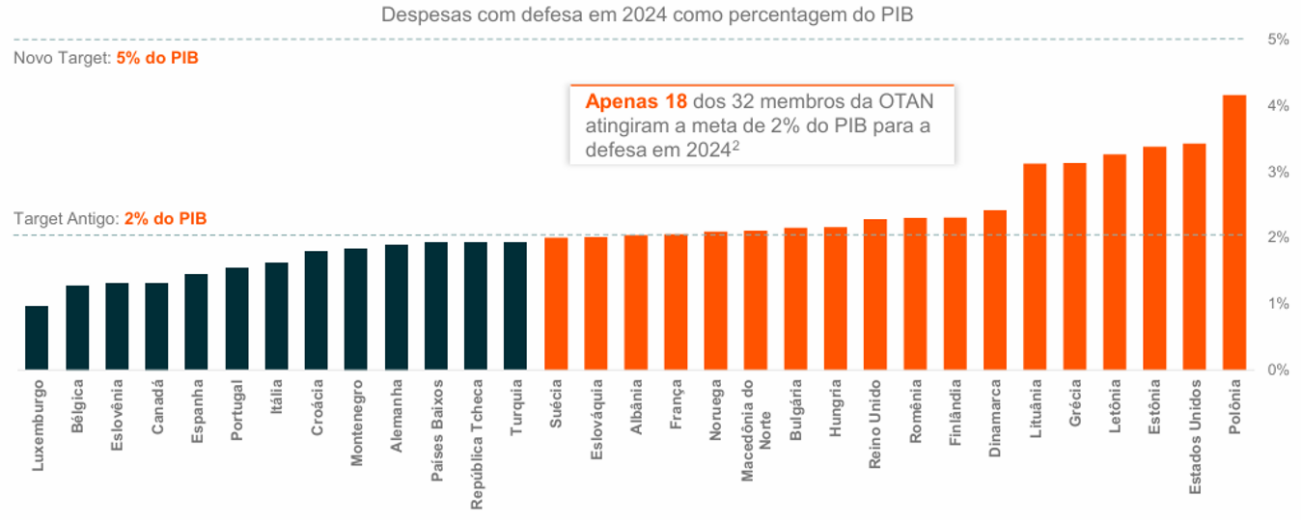
Europe is also accelerating. NATO raised its spending target from 2% to 5% of GDP by 2035, which could add hundreds of billions of dollars annually to the sector. The European Union, in turn, plans €800 billion in additional defense investments by 2030. In other words: the defense technology thesis is not cyclical—it is structural.
Source: Global X’s Charting Disruption
The Gold Rush
In times of uncertainty, gold tends to be sought after as a store of value. But within this universe lies an even more compelling segment: gold exploration companies. These are not large, consolidated miners; they are companies searching for new deposits and developing projects that could become working mines in the future.
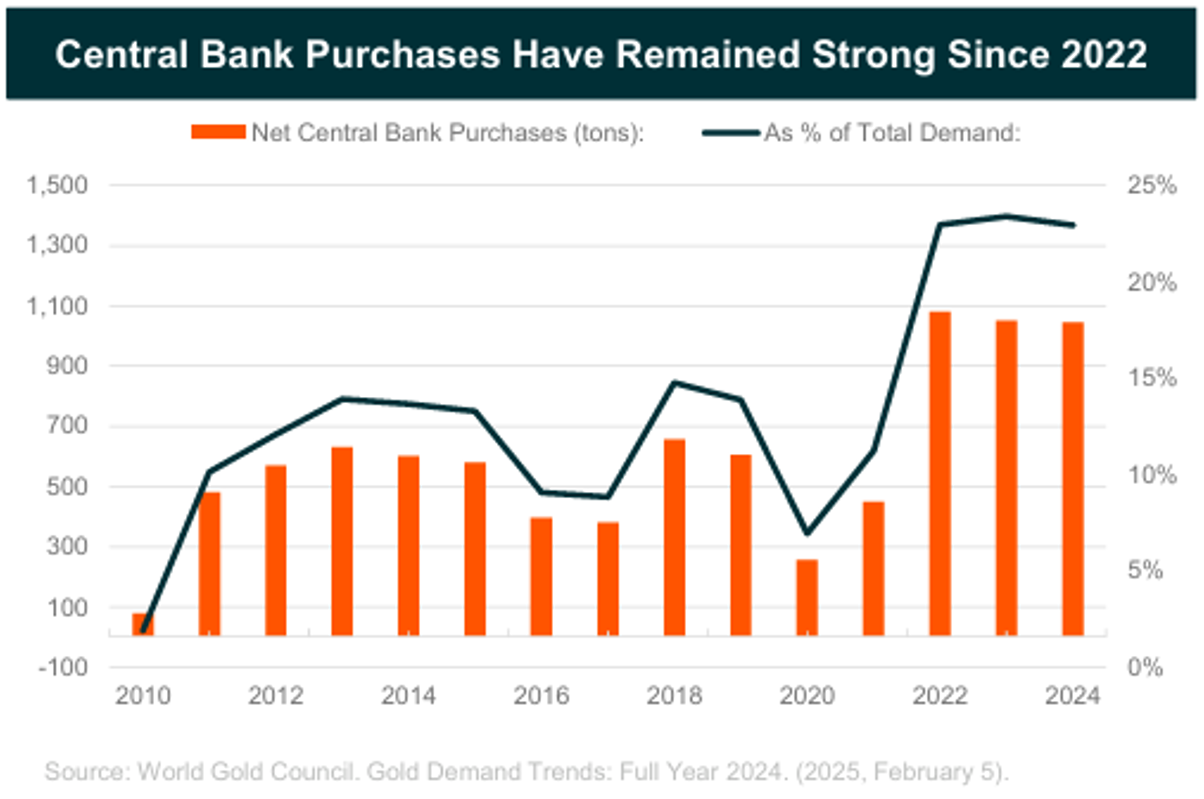
Demand for gold remains robust. Central banks have bought over 1,000 metric tons per year since 2022, and roughly 70% of them state that they intend to increase their reserves over the next five years. At the same time, supply is barely expanding. Higher extraction costs, regulatory risks, and a scarcity of high-quality projects limit global production growth. This creates a favorable environment for companies capable of discovering new deposits—and that is precisely where explorers and developers stand out.
Source: Global X’s Charting Disruption
Historically, these companies display greater leverage and sensitivity to gold prices. When the metal rises, their projects become more viable and their valuations can expand rapidly. Moreover, periods of elevated prices usually boost mergers and acquisitions in the sector, as major miners buy explorers to replenish reserves.
Thus, while the defense thesis relies on technological modernization and expanding military budgets, the gold explorer thesis benefits from the search for safety and the need for new discoveries in a supply-constrained market. They are different narratives, but both reflect long-term structural trends.
For investors wishing to gain exposure to these theses in a diversified and efficient manner, there are global thematic ETFs bringing together defense and military tech companies, such as the Global X Defense Tech ETF (SHLD39), as well as ETFs focused on gold explorers, such as the Global X Gold Explorers ETF (GOEX39). They allow investors to capture these trends without the need to select individual stocks—a practical and diversified way to participate in movements shaping the future of the global economy.